



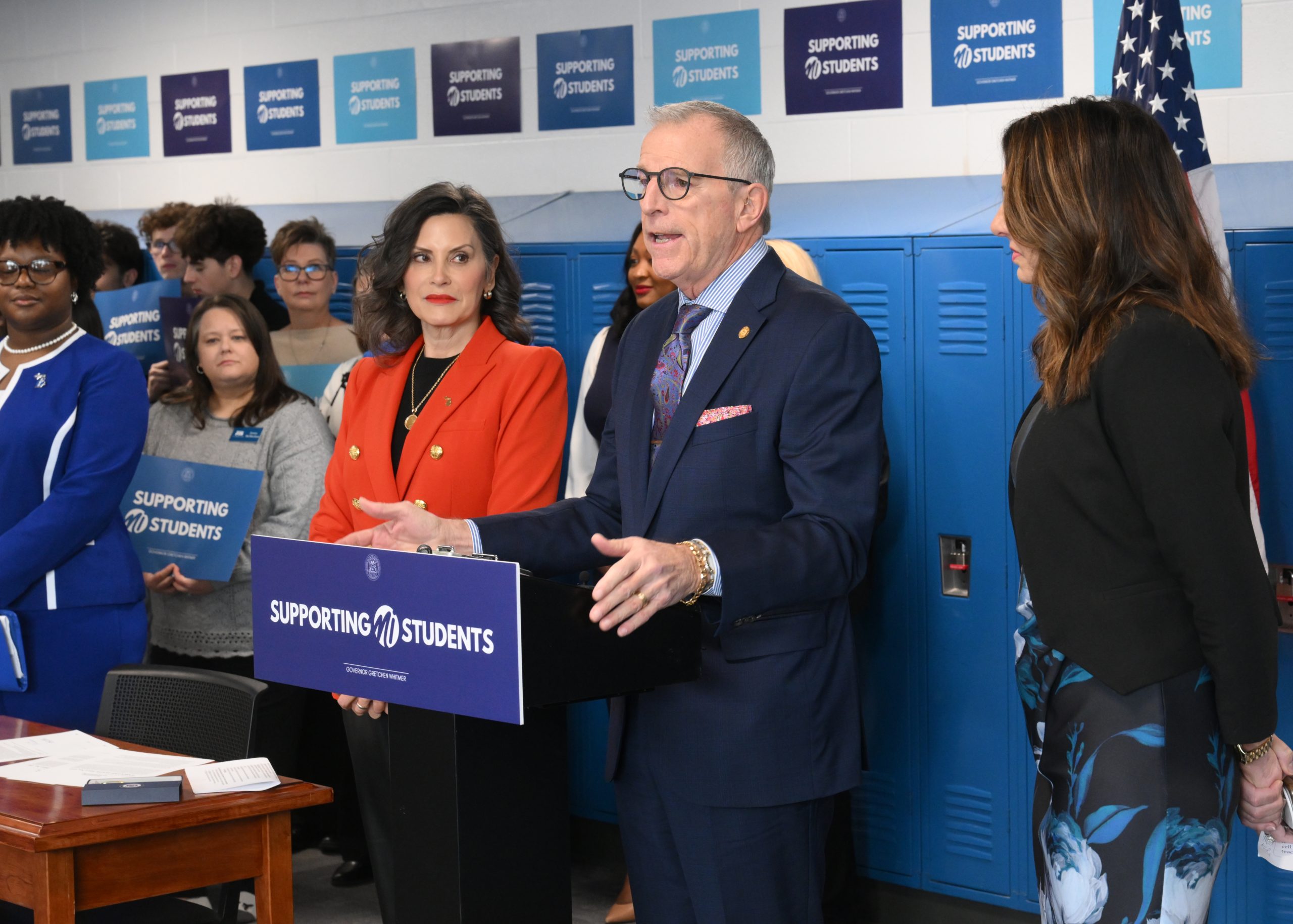
I’m proud to report that on Feb. 10, Gov. Whitmer signed my bill to get cellphones out of the classroom into law. Starting next school year, using a smartphone will be prohibited during instruction time for all grade levels K-12. (There are some exceptions, such as for emergency situations. And old-style “dumb phones” / basic phones are still allowed.)
Getting smartphones out of the classroom will help protect young, developing brains. But that was only phase one. Next, we need to give parents more ability to control how their children use social media, which is intentionally designed to be addictive. That’s why I introduced legislation to require parental permission for a child to open or maintain a social media account.
House Bill 4388 would require a parent or guardian to open an account for a minor, give that adult full access to the account, and make that minor’s account unavailable between 10:30 PM and 6:30 AM. Parents are ultimately responsible for the wellbeing of their children, and for picking up the pieces when things go wrong, so they deserve the authority on the front end to protect their children from online harms.
Think of it this way: Minors cannot sign up for their own cellphone plan or take out a loan to buy their first car. Why? Because you have to sign a contract, and minors cannot legally consent to a contract.
The Terms of Use Agreements that social media sites require users to accept are, in fact, legally binding contracts. Yet the Children’s Online Privacy Protection Act of 1998 allows 13-year-olds to open online accounts. Well, a lot has changed on the internet since 1998. Nowhere else do we allow minors to consent to a legally binding contract. Why would we make an exception for addictive social media sites?
My bill has already had a hearing in the House Regulatory Reform Committee.
Earlier this year, Australia banned access to social media sites for anyone under the age of 16. Since then, 4.7 million social media accounts have been closed. The sky did not fall. Today, France, Indonesia, Spain, and the Netherlands are moving similar regulation. The United Kingdom and the Europe Union are likely to follow, soon. This means the online social media sites already know how to comply with legislated restrictions.
Together, restricting smartphone use in schools and giving parents the authority to control and monitor their children’s social media use will significantly reduce social media exposures and associated harms. It’s important to recognize that research has now demonstrated direct causation of mental health concerns to social media exposure: increased loneliness, anxiety, depression, self-harm, and suicidal ideation.
Just like legislation that was passed to prohibit alcohol and tobacco use by minors, it’s time to regulate children’s access to addictive, algorithm-driven social media sites that are hurting our children’s mental health.




© 2009 - 2026 Michigan House Republicans. All Rights Reserved.
This site is protected by reCAPTCHA and the Google Privacy Policy and Terms of Service apply.